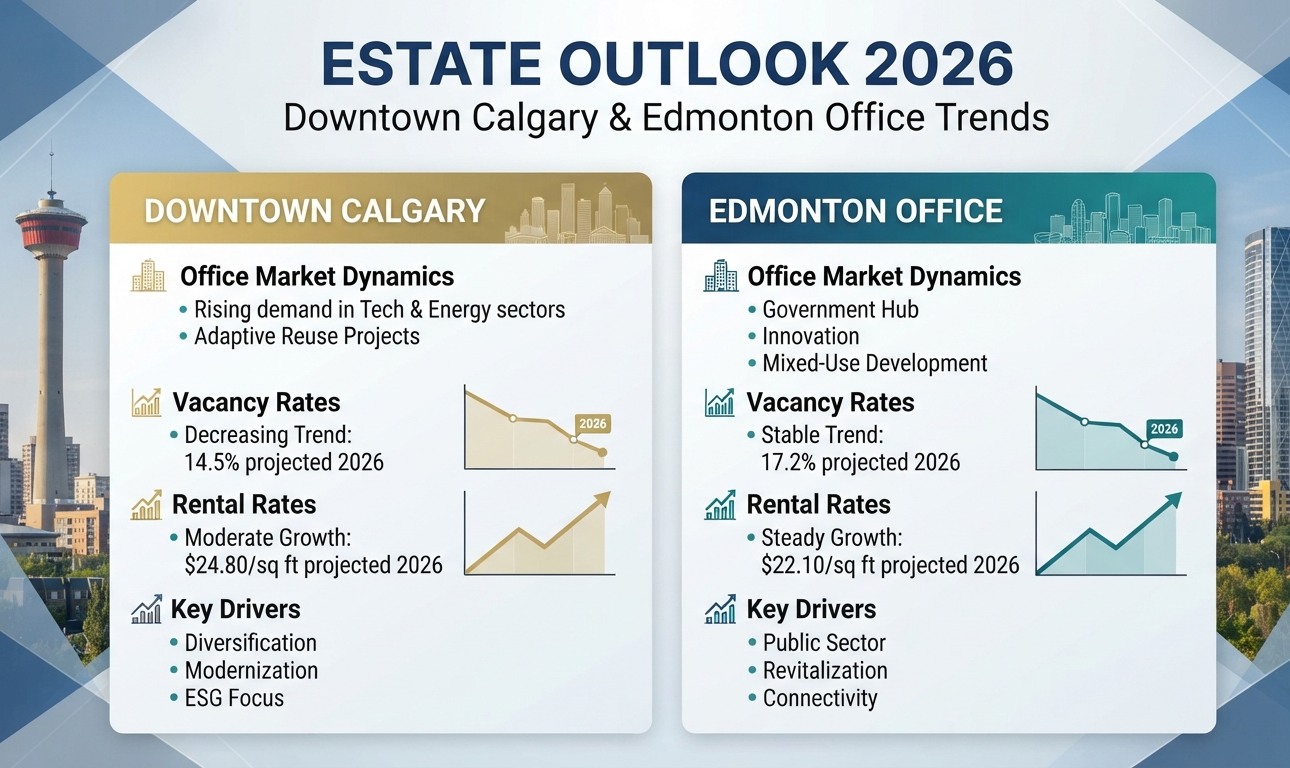
The commercial real estate landscape across Alberta is undergoing a structural shift in 2026. Long dominated by traditional energy corporate headquarters, downtown office sectors in Calgary and Edmonton are adapting to new market drivers, including tech industry expansion, office-to-residential conversions, and institutional capital inflows.

1. Key Commercial Market Indicators in 2026
Commercial property dynamics across Western Canada reflect broader economic diversification:
- Office Vacancy Stabilization: Downtown Calgary has seen a steady reduction in Class A office vacancy rates, supported by corporate tax incentives and tech firm relocations.
- Office-to-Residential Conversions: Municipal conversion incentive programs continue to remove non-viable office space from the market, turning vacant high-rises into high-density residential towers.
- Industrial & Logistics Demand: Industrial real estate surrounding Calgary and Edmonton remains in high demand, driven by supply chain nodes and e-commerce distribution centers.
2. Tech Expansion Driving Downtown Resurgence
The growth of Alberta’s technology sector is directly impacting commercial leasing activity:
- Sublease Space Absorption: Growing software engineering, AI, and cleantech companies are taking over surplus commercial footprints previously held by energy majors.
- Flexible Workspaces: Demand for hybrid coworking environments has increased, providing flexible lease terms for scaling startups in urban centers.
3. Personal Perspective: Commercial Market Dynamics on the Ground
Observing the downtown corridors of Calgary and Edmonton reveals a clear physical transformation. The reduction in vacant office space isn’t just a numerical trend—it is reflected in active streetscapes and new retail amenities catering to a broader workforce. For investors and business operators, Alberta continues to offer significantly lower commercial acquisition costs and tax advantages compared to Toronto and Vancouver, making it a compelling market for commercial real estate growth.
Conclusion: As Alberta’s economy diversifies, commercial real estate in Calgary and Edmonton is stabilizing into a balanced, highly resilient market for long-term investment.
Leave a Reply