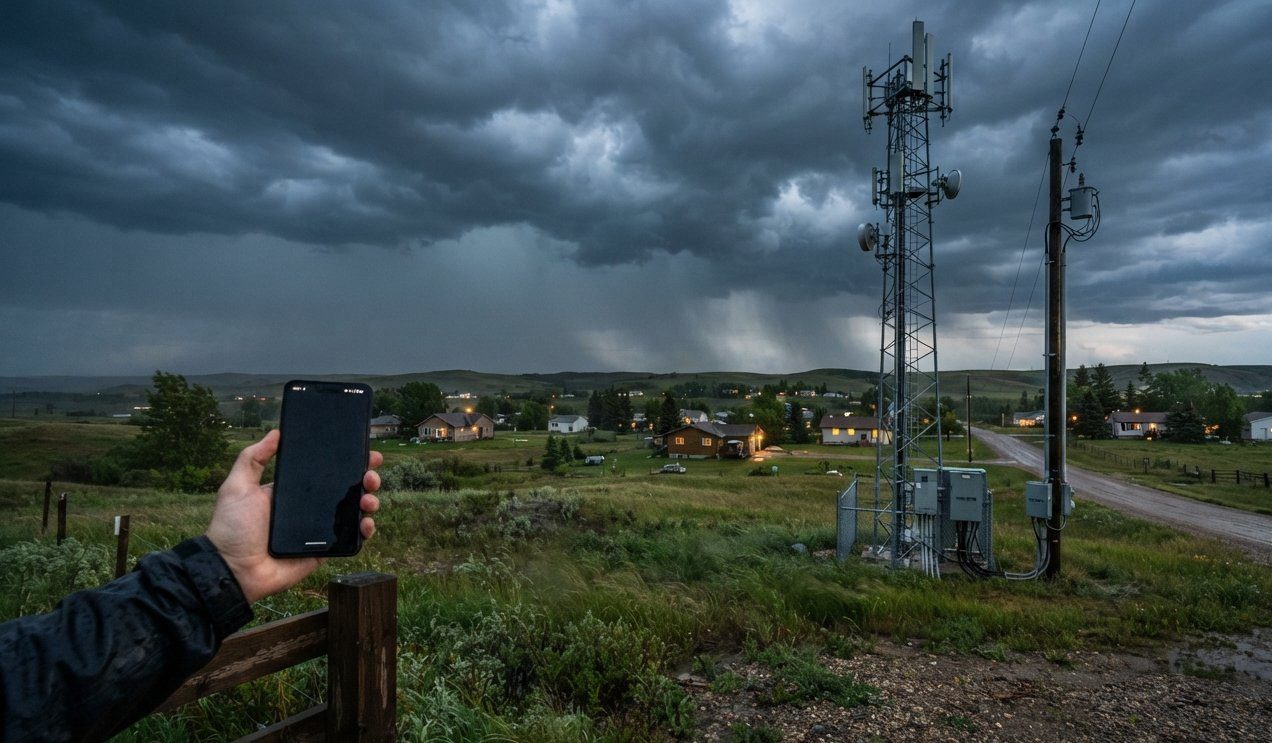
A rural community can technically have high-speed Internet and still have a serious connectivity problem: one damaged fibre line, extended power failure or network equipment issue can leave homes and businesses without service.
Canada’s telecommunications regulator is now changing how one of its major connectivity programs handles that problem.
On September 16, 2026, the Canadian Radio-television and Telecommunications Commission said its Broadband Fund can now finance projects intended specifically to improve network resiliency. Until now, projects generally had to expand qualifying Internet or cellphone service to underserved areas. Under the new policy, infrastructure that reduces the risk or impact of outages can qualify even when it does not add a large number of new households to the network.
That distinction matters because Internet access and Internet reliability are not the same thing.
What exactly changed?
The CRTC’s new Broadband Fund policy creates a new eligible category for resiliency projects.
The regulator says outages caused by extreme weather, technical failures, accidental network damage and other events can disrupt access to health services, education, work and emergency communications. Rural and remote communities can be particularly vulnerable because they often have fewer alternative networks available when the primary connection fails.
Previously, an infrastructure project that strengthened an existing network without expanding service to additional underserved households could fall outside the Broadband Fund’s main eligibility structure.
Now those projects can be considered.
That could include infrastructure designed to reduce single points of failure, strengthen network routes or otherwise make services more resistant to disruptions. The exact projects funded will depend on applications and CRTC approval rather than one standard upgrade applied to every network.
This does not mean Canadians will immediately see fewer outages
The policy change is important, but it should not be read as an instant consumer-service guarantee.
The CRTC has changed what kinds of infrastructure projects can receive funding. Individual telecommunications companies and eligible organizations still need to propose projects, receive approval and build the infrastructure.
In other words, the September decision creates a funding path. It does not mean every rural Internet connection suddenly has a backup route or every cellphone tower now has additional redundancy.
For households comparing their current service, reliability should therefore remain a separate consideration from advertised speed. Maple Curiosity’s guide to lowering home Internet costs in Canada explains how speed and monthly pricing affect plan selection, but a fast plan is only useful when the network itself remains available.
Why the CRTC is putting more attention on reliability
The Broadband Fund was originally built around Canada’s connectivity gap: getting high-speed Internet and mobile service into communities where adequate service was unavailable.
That work is continuing.
According to the CRTC’s September announcement, Broadband Fund projects have helped improve high-speed Internet and cellphone services in more than 320 communities, including more than 130 Indigenous communities. The projects are also supporting connectivity for more than 54,000 homes and cellphone coverage along more than 650 kilometres of major roads.
But as more communities gain access, another question becomes harder to ignore: what happens when that connection goes down?
For a household in a major city, an outage may be disruptive but alternatives can sometimes exist. Mobile data, another nearby network or public Wi-Fi may provide temporary access.
A remote community may not have those options.
The CRTC specifically identified extreme weather and other emergencies as situations where losing connectivity can become more than an inconvenience. When a network is also carrying emergency alerts, phone service or access to essential services, reliability becomes part of public safety.
The $150 million annual Broadband Fund cap remains
The new project category does not come with an unlimited new funding pool.
The CRTC decided to maintain the Broadband Fund’s current annual distribution limit of $150 million.
That means resiliency projects will become part of the broader funding system rather than operating as an entirely separate unlimited program.
The regulator also decided not to introduce additional operational funding through this particular policy review. The September decision is focused primarily on which infrastructure projects can qualify and how the Fund should treat network resiliency.
Alberta is receiving new broadband investment at the same time
The timing is particularly relevant for Alberta.
One day before the CRTC announcement, the federal and Alberta governments announced $24.8 million in joint funding for two projects expected to bring high-speed Internet access to 1,833 households in rural and remote Alberta communities.
The announcement stated that 98.1% of Alberta households currently have access to high-speed Internet. Canada’s national connectivity target defines high-speed access as at least 50 Mbps download and 10 Mbps upload.
Those figures show why the conversation is gradually moving beyond basic coverage. As access rates approach the high 90% range, remaining communities can be more difficult and expensive to connect, while existing rural networks still need to remain reliable once they are built.
For Alberta, both issues are now happening at the same time: extending service to households that still lack adequate access and strengthening the networks already in place.
What does this mean when choosing an Internet provider?
For most consumers, the Broadband Fund decision will not change tomorrow’s Internet bill.
It does, however, highlight an issue that price-comparison pages often overlook.
Two providers can advertise similar speeds and monthly prices while relying on very different local infrastructure. A household should still compare download speed, upload speed, data limits, promotional pricing and contract terms, but local reliability can also matter—particularly outside major urban centres.
The same idea applies to mobile service. Maple Curiosity’s Canadian cellphone plan guide looks at the cost side of choosing a plan. Coverage and reliability need to be considered alongside that price, especially for people who regularly drive through rural areas or rely heavily on mobile data.
Coverage and resiliency are becoming two separate policy goals
Canada’s broadband strategy has traditionally been easy to describe: connect households that do not have adequate Internet.
The next phase is more complicated.
A network has to reach a community, provide sufficient speed and remain functional when conditions become difficult.
The CRTC’s new policy formally recognizes that third part.
This also connects with a broader change in Alberta’s economy. Reliable digital infrastructure supports remote work, online education, agriculture, energy operations and technology businesses. Maple Curiosity has previously examined Alberta’s expanding technology and AI economy; dependable connectivity outside Edmonton and Calgary is part of the infrastructure needed for that growth to extend beyond the largest cities.
What to watch next
The next important step is not another policy announcement. It is the actual project list.
The CRTC is accepting proposals under the current Broadband Fund call until October 15, 2026. Future funding decisions will show what types of resiliency upgrades applicants propose and where they are located.
For consumers, those project announcements will be more useful than assuming the September policy itself immediately changes service quality.
Canada has made substantial progress in expanding broadband coverage. The new question is whether those connections can stay available when communities need them most.
Leave a Reply