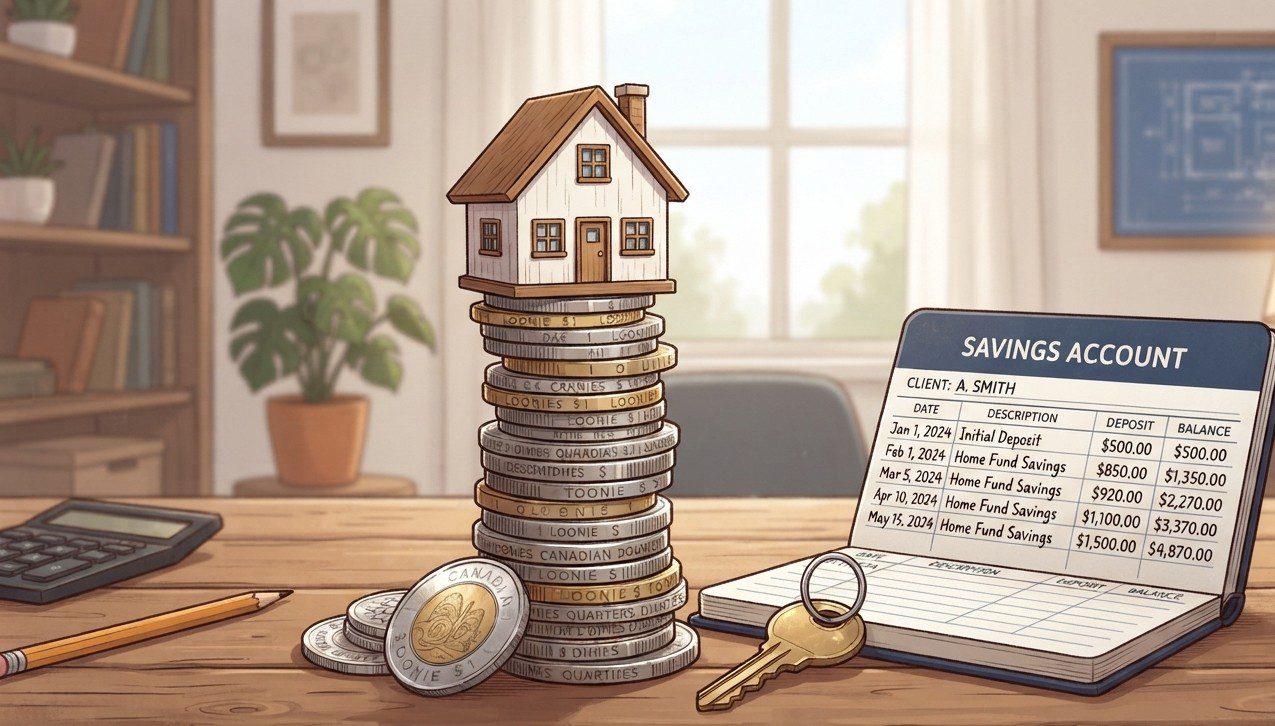
Saving for a down payment is often the highest hurdle for prospective homebuyers across Canada. The First Home Savings Account (FHSA) combines the best features of both an RRSP and a TFSA, offering tax-deductible contributions and 100% tax-free withdrawals when purchasing a qualifying home.
If your goal is to transition from renting to owning real estate, understanding how to maximize your FHSA contribution room can accelerate your savings timeline significantly.
1. Key Features and Annual Contribution Caps
The FHSA is designed specifically for Canadian residents who are at least 18 years old and classified as first-time home buyers:
- Annual Contribution Limit: You can contribute up to $8,000 per calendar year.
- Lifetime Cap: The maximum lifetime contribution limit is $40,000 per person.
- Carry-Forward Allowance: Unused contribution room carries over to the following year, up to a maximum carry-forward cap of $8,000 (meaning your total contribution in a single year cannot exceed $16,000).
- Tax Benefit Structure: Contributions reduce your net income for the year (yielding a tax refund), while qualifying withdrawals for a home purchase remain entirely tax-free.
2. Comparing FHSA and Other Home-Buying Tools
When preparing for a mortgage approval, homebuyers can combine multiple registered accounts to build a larger down payment:
| Feature | First Home Savings Account (FHSA) | Home Buyers’ Plan (HBP via RRSP) |
| Withdrawal Tax | $0 tax on qualifying home purchase | $0 tax upfront, but must be repaid over 15 years |
| Maximum Limit | $40,000 lifetime contributions | $60,000 maximum withdrawal per person |
| Repayment Rule | No repayment required ever | Mandatory 15-year annual repayment schedule |
| Account Lifespan | Must be used within 15 years or by age 71 | N/A (RRSP remains open) |
3. Practical Down Payment Strategies for Buyers
- Combine Family Contribution Rooms: Spouses can each open an FHSA, allowing a couple to save up to $80,000 tax-free for a joint home purchase.
- Improve Credit Standing: Pair your savings account with a healthy credit history to secure lower interest rates—read our practical steps in 🔗 Credit Score Canada Guide.
- Manage Taxable Income Slips: Deducting FHSA contributions on your tax return lowers your reported income—check key tax reporting boxes using our 🔗 T4 Slip Breakdown.
- Verify Official Savings Limits: Confirm your precise available room before making transfers via your 🔗 CRA My Account Setup.
4. Frequently Asked Questions (FAQ)
What happens if I open an FHSA but end up not buying a home?
If you do not purchase a home within 15 years of opening the account, you can transfer the entire balance directly into your RRSP tax-free without affecting your existing RRSP contribution room!
Can I use both the FHSA and the RRSP Home Buyers’ Plan (HBP) together?
Yes! First-time buyers are allowed to combine withdrawals from both their FHSA and RRSP HBP toward the purchase of the same qualifying home.
💬 Editor’s Note & Personal Insights
Open an FHSA account even if you only deposit $100 in your first year. Simply opening the account starts the 15-year clock and generates your official annual carry-forward room for future years!
Leave a Reply