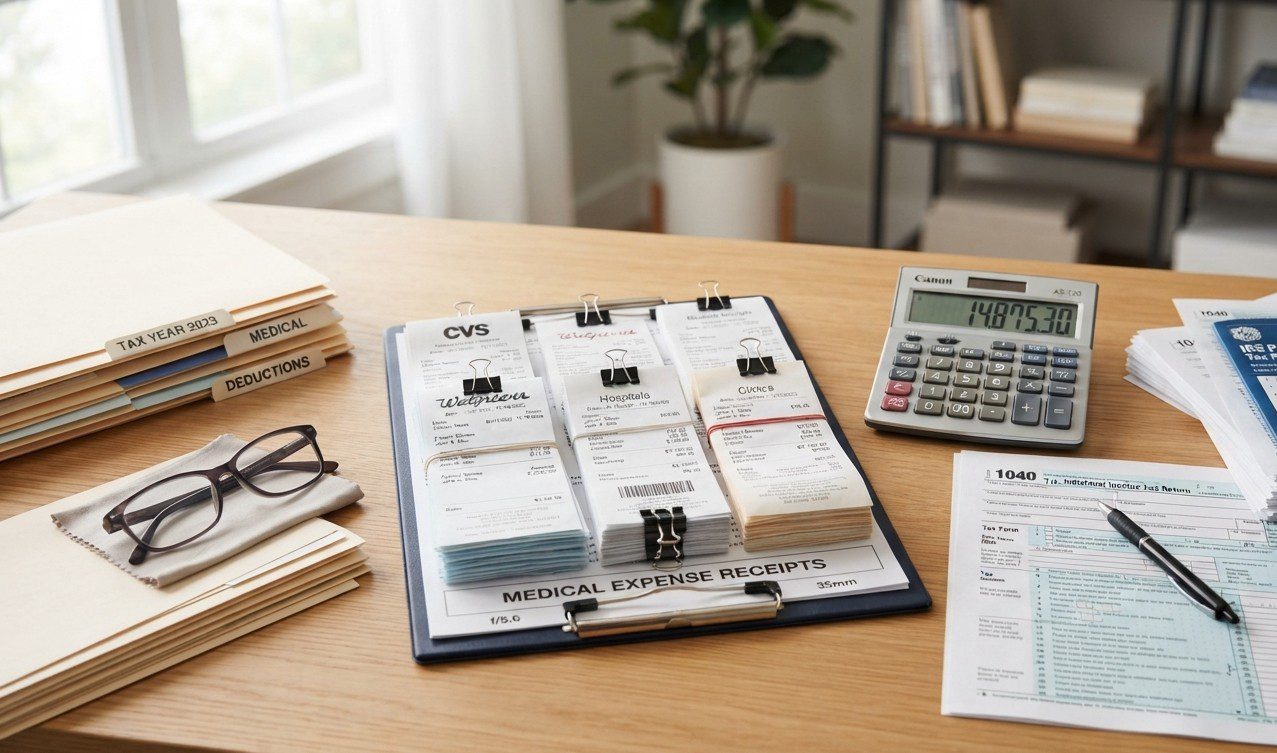
While Canada’s public healthcare system covers basic doctor visits and hospital stays, residents often pay out-of-pocket for dental care, prescription drugs, eyeglasses, and specialized therapies.
Fortunately, the Medical Expenses Tax Credit (METC) allows taxpayers to claim non-reimbursed medical expenses on their annual CRA income tax return to lower their total tax bill.
1. Understanding the CRA Medical Expense Threshold
The METC is a non-refundable tax credit. To qualify for a tax reduction, your total eligible medical expenses must exceed a specific minimum threshold for the tax year:
- The CRA Threshold: You can claim medical expenses that exceed 3% of your net income (Line 23600) OR the annual federal index limit set by the CRA (whichever amount is lower).
- The 12-Month Rule: You can group eligible medical expenses for any 12-month period ending in the tax year, as long as those expenses were not previously claimed on a prior tax return.
2. Commonly Claimed Eligible Medical Expenses
You can claim expenses paid for yourself, your spouse or common-law partner, and your dependent children under 18:
| Medical Category | Eligible Expenses | Non-Eligible Expenses |
| Vision Care | Prescription eyeglasses, contact lenses, laser eye surgery | Non-prescription sunglasses, cosmetic lenses |
| Dental Care | Fillings, root canals, braces, dentures, extractions | Teeth whitening, cosmetic dental procedures |
| Prescriptions | Prescription drugs and medicines ordered by a doctor | Over-the-counter vitamins, supplements, basic pain relievers |
| Devices & Services | Prescription hearing aids, mobility devices, private health insurance premiums | Gym memberships, general wellness products |
3. Practical Tips to Maximize Your Refund
- Combine Receipts on the Lower Income Spouse: Because the qualifying threshold is based on 3% of net income, pooling all family medical receipts on the spouse with the lower net income yields a larger tax credit.
- Keep Every Receipt for 6 Years: The CRA frequently audits medical expense claims. Keep original receipts, official prescriptions, and health insurance statements organized.
- Link Benefits to Lower Net Income: Combining medical expense deductions with other income reductions increases benefit payouts—review our 🔗 Canada Child Benefit (CCB) 2026 Guide to see how lowering net income boosts monthly family payments.
- Track Notices of Assessment: Download your past NOA records easily by setting up your portal via 🔗 CRA My Account Setup.
4. Frequently Asked Questions (FAQ)
Can I claim expenses that were reimbursed by my private employer insurance?
No. You can only claim out-of-pocket expenses that were not reimbursed by any insurance plan. However, any monthly premiums you pay yourself for private health insurance can be claimed!
Can travel expenses for medical care be claimed?
If you traveled at least 40 kilometers (one way) to receive medical treatment that was unavailable in your local community, you can claim public transportation or vehicle expenses.
💬 Editor’s Note & Personal Insights
Start a dedicated digital folder or envelope for all family medical and dental receipts starting January 1st. Gathering these receipts at tax time is one of the easiest ways to claim money back from the CRA!
Leave a Reply