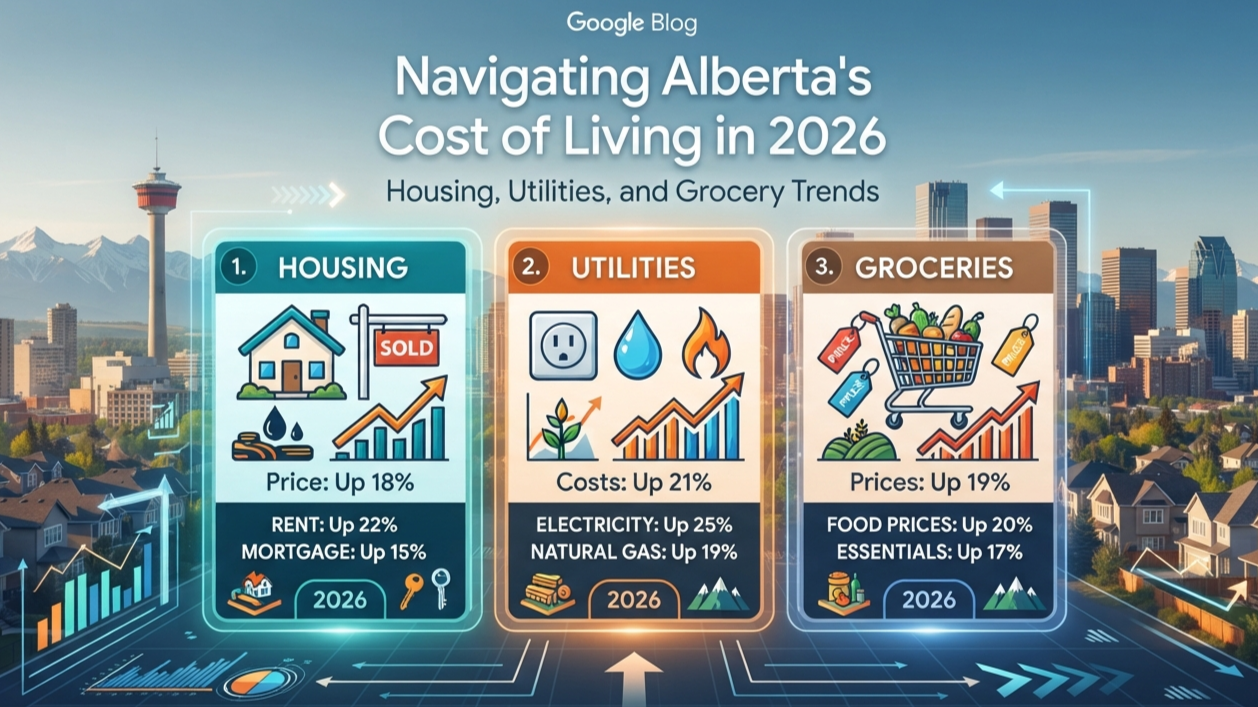
While Alberta continues to retain its status as one of Canada’s most economically dynamic provinces, residents and newcomers alike are navigating shifting household budget dynamics in 2026. While the lack of a provincial sales tax (PST) remains a structural advantage, rising utility costs, insurance premiums, and grocery inflation require strategic financial planning.

1. Key Household Expense Breakdown in 2026
Managing a family budget in Calgary or Edmonton involves understanding specific local cost drivers that differ from eastern Canadian provinces:
- Housing & Rent: Rapid population inflows have maintained tight rental vacancy rates, keeping rent levels firm across major urban centers.
- Electricity & Heating: Regulated Rate Option (RRO) adjustments and natural gas delivery fees continue to create seasonal fluctuations in monthly winter utility bills.
- Auto & Home Insurance: Vehicle insurance costs in Alberta remain higher than the national average due to weather-related claim volumes and private market structures.
2. Alberta vs. B.C. & Ontario: The Real Affordability Gap
Despite localized price increases, Alberta retains a significant structural cost advantage over Vancouver and Toronto:
- Income Tax Advantage: Alberta’s progressive tax structure and absence of PST save average dual-income households thousands annually compared to Ontario or B.C.
- Real Estate Price-to-Income Ratio: Homeownership remains significantly more achievable for mid-career professionals and young families transitioning into the province.
3. Personal Perspective: Everyday Impact on the Ground
Living in Alberta through this growth phase offers a clear view of these economic statistics in real-time. Over the past year, the influx of interprovincial migrants is evident not just in housing statistics, but in everyday life—from busier grocery stores to quick rentals disappearing within days of being listed.
While gas prices and overall taxes remain visibly lower here than in Toronto or Vancouver, monthly utility charges and auto insurance can catch newcomers off guard if they aren’t budgeted properly. The provincial advantage is still very real, but staying financially comfortable in 2026 requires keeping a close eye on variable monthly expenses rather than relying solely on lower tax rates.
Conclusion: Alberta remains an attractive destination for professional growth and housing affordability. By staying informed on utility structures and regional inflation trends, households can maximize the financial benefits of living in Western Canada.
Leave a Reply