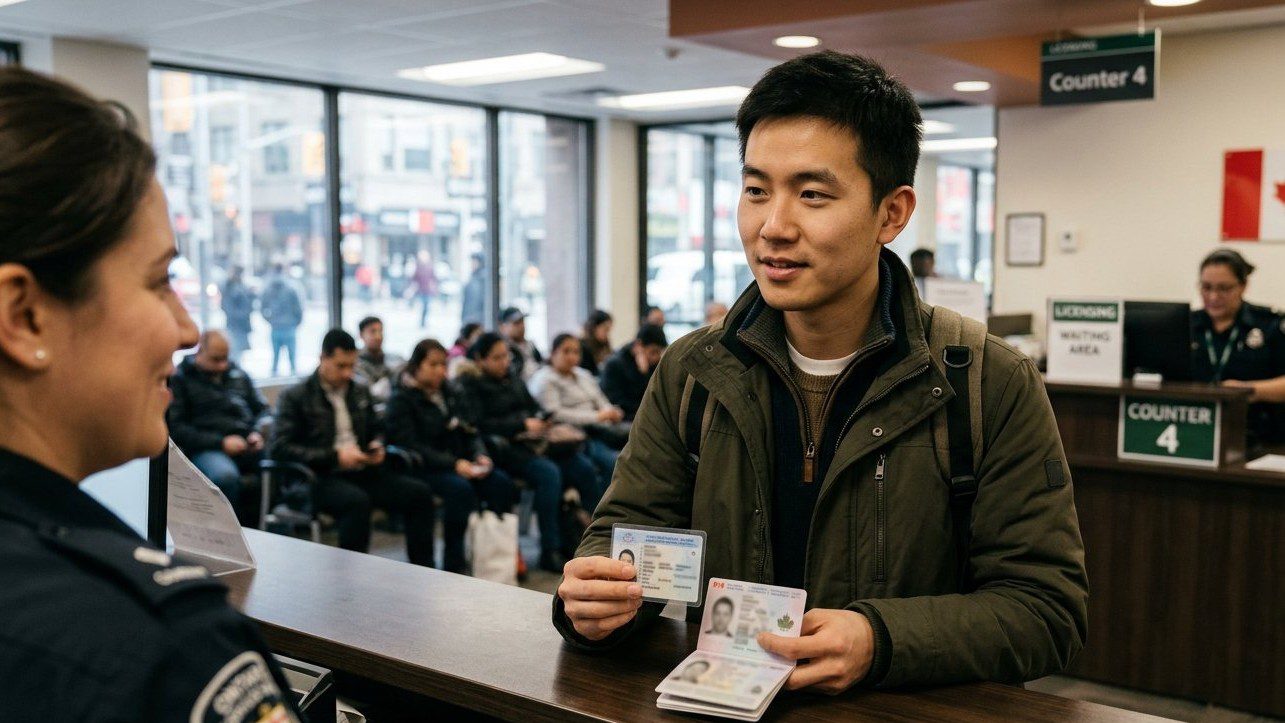
Canada does not have one national driver’s licence exchange system. Driver licensing is managed by each province and territory, so the process depends on where you live, where your current licence was issued, what class of licence you hold and how much previous driving experience you can prove.
A foreign licence that can be exchanged without testing in one province may be handled differently in another. New residents should therefore check the rules for the province where they are actually settling.
This guide focuses on Alberta, Ontario, British Columbia and Quebec using current provincial licensing-authority information.
Foreign Driver’s Licence Exchange: 2026 Provincial Overview
| Province | How Long a New Resident Can Generally Use a Valid Foreign Licence | Licensing Authority |
|---|---|---|
| Alberta | 90 days | Government of Alberta / registry agents |
| Ontario | 60 days | Ontario / DriveTest |
| British Columbia | 90 days | ICBC |
| Quebec | 6 consecutive months | SAAQ |
These timelines apply to new residents in the ordinary passenger-vehicle context. Visitors, students, temporary workers and commercial drivers can have different rules.
Reciprocal Exchange Agreements Matter
Each province maintains its own list of jurisdictions whose passenger-vehicle licences can be exchanged under a reciprocal agreement.
If your licence comes from a recognized exchange jurisdiction, you may be able to obtain the equivalent provincial licence without the ordinary knowledge and road tests.
If your jurisdiction is not on the exchange list, you can still apply for a provincial licence, but testing is generally required. Previous driving experience may still affect the licensing stage or waiting periods.
Alberta: Exchange Within 90 Days
The Government of Alberta states that people living in Alberta permanently must exchange their current driver’s licence within 90 days of becoming a resident.
Alberta has reciprocal exchange arrangements with a number of jurisdictions. Its current list includes the Republic of Korea, Japan, France, Germany, Taiwan, the United Kingdom and several other countries, as well as separate exchange treatment for U.S. licences.
An eligible applicant from a recognized jurisdiction can receive the applicable Alberta Class 5 or Class 6 licence without a knowledge or road test, subject to the exchange agreement and other requirements.
Official Alberta rules are published at Exchange a licence from outside Alberta.
Two Years of Driving Experience Matters in Alberta
Alberta states that a person exchanging a recognized passenger-vehicle licence should provide proof of two or more years of driving experience if they want to receive a full Class 5 licence.
If less than two years of experience can be established, the driver may be placed into Alberta’s Graduated Driver Licensing system.
For a detailed Alberta-only explanation, see our Alberta Driver’s Licence Exchange 2026 guide.
What Alberta Requires at the Registry
For an exchange, Alberta requires the applicant to surrender the current out-of-Alberta licence and any other driver’s licences in their possession, including expired licences.
The applicant must also provide proof of Alberta residency and proof of legal status in Canada.
When driving experience needs to be established, supporting records from the previous licensing authority may also be required.
Alberta: What if Your Country Is Not on the Exchange List?
Alberta states that applicants from jurisdictions without a reciprocal exchange agreement must pass the applicable knowledge and road tests.
The foreign licence can still be important because Alberta can review previous driving experience when determining the licensing process.
Alberta Temporary Residents and Students
The 90-day permanent-resident rule does not apply in the same way to every person staying in Alberta temporarily.
Alberta states that certain visitors, full-time students, Canadians working temporarily in the province and workers under the Seasonal Agricultural Worker Program may continue using a valid home-jurisdiction licence under separate rules.
If a visitor’s licence is not in English, Alberta strongly recommends carrying an International Driving Permit together with the valid home-country licence.
Ontario: Exchange Within 60 Days
Ontario allows a new resident to use a valid licence from another province, state or country for 60 days. After that period, an Ontario licence is required to continue driving.
Ontario’s current reciprocal exchange list includes U.S. states and countries such as Australia, France, Germany, Japan, South Korea, Taiwan, the United Kingdom and several others.
Ontario’s official rules are available at Exchange an out-of-province driver’s licence.
Ontario: Two Years of Experience and Full Class G
Ontario considers both the jurisdiction and the amount of previous driving experience.
Drivers from reciprocal jurisdictions who hold an equivalent full licence and have at least 24 months of qualifying driving experience can generally receive the equivalent full Class G licence.
A driver with less than two years of experience may receive credit for the experience already accumulated and enter Ontario’s graduated licensing system at the applicable stage.
Ontario Changed Foreign Experience Rules on July 1, 2026
Ontario changed how driving experience from non-exchange jurisdictions is credited effective July 1, 2026.
Ontario now allows credit for up to 12 months of foreign driving experience from a non-exchange jurisdiction when the required original licence and authentication document are provided.
The authentication document must be an official letter from the foreign government or licensing agency, confirm that the licence is authentic, and be written in English or French.
Ontario states that applicants from non-exchange jurisdictions must complete the vision test, knowledge test and G2 road test, then wait at least 12 months before attempting the G road test.
Ontario Translation Rules
A foreign licence used for an Ontario exchange must be written in English or French. If it is not, Ontario requires a translation from an approved translator.
Ontario states that the translation must be current and dated within six months of the application.
British Columbia: Exchange Within 90 Days
ICBC states that a person moving to British Columbia has 90 days to switch a valid licence to a B.C. driver’s licence.
Some foreign licences can be exchanged without additional testing. Drivers from other jurisdictions must complete the applicable knowledge and road tests.
Current rules are published at ICBC — Moving from outside Canada.
B.C. Requires Proof of Driving Experience
ICBC requires new residents to provide their driver licence history.
Proof of at least two years of full-privilege, non-learner driving experience is needed to be exempt from B.C.’s Graduated Licensing Program.
ICBC accepts documents such as an original current licence showing the original licensing date or an original driving record or letter of experience that contains the required information.
ICBC’s documentation rules are listed at Proving your driving experience.
B.C. Translation Requirements
ICBC says translation requirements depend on the jurisdiction and the documents being submitted.
If ICBC requires a translation, it must be completed by an ICBC-approved translator.
B.C. Requires You to Surrender the Previous Licence
ICBC requires applicants to surrender any driver’s licence they currently hold when applying for a B.C. licence.
ICBC states that a person can legally hold only one driver’s licence in British Columbia.
B.C. Graduated Licensing Changes in October 2026
B.C. is changing part of its Graduated Licensing Program on October 19, 2026.
ICBC states that the second road test for eligible Class 7 drivers is being replaced by a Driving Record Assessment. This change mainly affects drivers who are in B.C.’s graduated licensing system rather than people who qualify for a direct full-licence exchange.
See Changes to the Graduated Licensing Program.
Quebec: New Residents Generally Have Six Months
SAAQ states that a new Quebec resident can generally drive a passenger vehicle, motorcycle, moped or scooter with a valid foreign licence for up to six consecutive months after settling in Quebec.
After that period, a Quebec licence is required to continue driving those vehicles as a resident.
Current rules are published at SAAQ — Driver’s Licence Issued Outside Quebec.
Quebec Reciprocal Exchange Jurisdictions
For passenger vehicles, Quebec currently allows licence exchange without proficiency tests for eligible licence holders from certain jurisdictions.
SAAQ’s current list includes Austria, Belgium, France, Germany, Great Britain, Isle of Man, Japan, the Netherlands, Northern Ireland, the Republic of Korea, Switzerland and Taiwan, in addition to separate arrangements for licences issued elsewhere in Canada and the United States.
Applicants from jurisdictions outside the exchange list generally need to meet Quebec’s testing requirements.
Quebec Non-Exchange Licences
SAAQ states that a person from a country without a reciprocity agreement may be able to obtain a Quebec licence if the eligibility conditions are met, including the applicable licence-history requirement, and the required knowledge and road tests are passed.
For this route, SAAQ states that the person generally must have held the foreign passenger-vehicle licence for at least one year before becoming a Quebec resident.
Students and Temporary Residents Are Not Always Treated Like New Permanent Residents
Provincial rules often distinguish between someone who has taken up residence and someone who is visiting, studying or working temporarily.
For example, Alberta and B.C. both provide exceptions for certain students and temporary residents. Quebec also allows qualifying students or trainees whose principal residence remains outside Quebec to use a valid foreign licence for the duration of their studies or traineeship.
The correct licensing route therefore depends on residency status under the province’s driver-licensing rules, not simply on immigration document type.
Driving History Can Affect Licensing and Insurance Separately
Driving-history documents can be used by a licensing authority to establish experience, and they may also be relevant to auto insurance.
The two systems are separate. A document accepted by a licensing authority does not automatically guarantee a particular insurance discount.
ICBC, for example, states that it can credit up to 15 years of driving experience when acceptable records show the original date the driver was licensed. In provinces with private insurers, the evidence accepted and premium impact can vary by insurer.
Documents Commonly Needed for a Foreign Licence Exchange
The exact list varies by province, but common requirements include:
- original valid foreign driver’s licence
- accepted identity documents
- proof of legal status in Canada where required
- proof of provincial residence where required
- proof of previous driving experience
- approved translation when required
Because translation and driving-history rules differ, the provincial authority should be checked before paying for documents or translation services.
Do You Keep Your Foreign Licence After an Exchange?
Do not assume that you can keep both licences.
Alberta explicitly requires applicants to surrender out-of-Alberta licences in their possession. ICBC also requires applicants to surrender existing driver’s licences when applying for a B.C. licence.
Other provinces can have their own exchange procedures, so check the local rule before the appointment.
2026 Provincial Comparison
| Rule | Alberta | Ontario | B.C. | Quebec |
|---|---|---|---|---|
| General new-resident driving period | 90 days | 60 days | 90 days | 6 months |
| Direct exchange jurisdictions | Yes | Yes | Yes | Yes |
| Previous experience matters | Yes | Yes | Yes | Yes |
| Two-year experience threshold important | Yes for full Class 5 | Yes for full Class G in reciprocal cases | Yes for GLP exemption | Rules depend on exchange route |
| Translation rules province-specific | Yes | Yes | Yes | Yes |
Frequently Asked Questions
Can a South Korean driver’s licence be exchanged in Canada?
It depends on the province. Alberta, Ontario and Quebec currently list the Republic of Korea or South Korea among their reciprocal passenger-vehicle exchange jurisdictions, and B.C. also recognizes South Korean licences under its exchange system.
How long can I drive with a foreign licence after moving to Canada?
There is no single Canadian deadline. Alberta and B.C. generally use 90 days for new residents, Ontario uses 60 days, and Quebec generally allows six consecutive months for the ordinary passenger-vehicle categories covered by its rule.
Do I need two years of driving experience?
Two years is an important threshold in several provinces. Alberta uses it for full Class 5 eligibility in applicable exchanges, Ontario uses 24 months in determining full Class G treatment for reciprocal licences, and B.C. requires proof of more than two years of full-privilege non-learner experience to avoid its Graduated Licensing Program.
What if my country does not have an exchange agreement?
You can still apply for a provincial licence, but knowledge and road testing are generally required. Previous experience may still affect the process, depending on the province.
Do I need an International Driving Permit?
An International Driving Permit is generally used together with a valid home-country licence rather than replacing it. Some provinces recommend or require it in specific temporary-driving situations when the licence is not in English or French.
Will I have to surrender my old licence?
Often, yes. Alberta and B.C. explicitly require surrender of the existing licence during the exchange process. Other provinces have their own procedures.
Disclaimer: Driver-licensing rules can change and can depend on licence class, residency status, driving history and issuing jurisdiction. Confirm the current requirements with the official licensing authority in the province where you live before surrendering documents or booking tests.
Leave a Reply