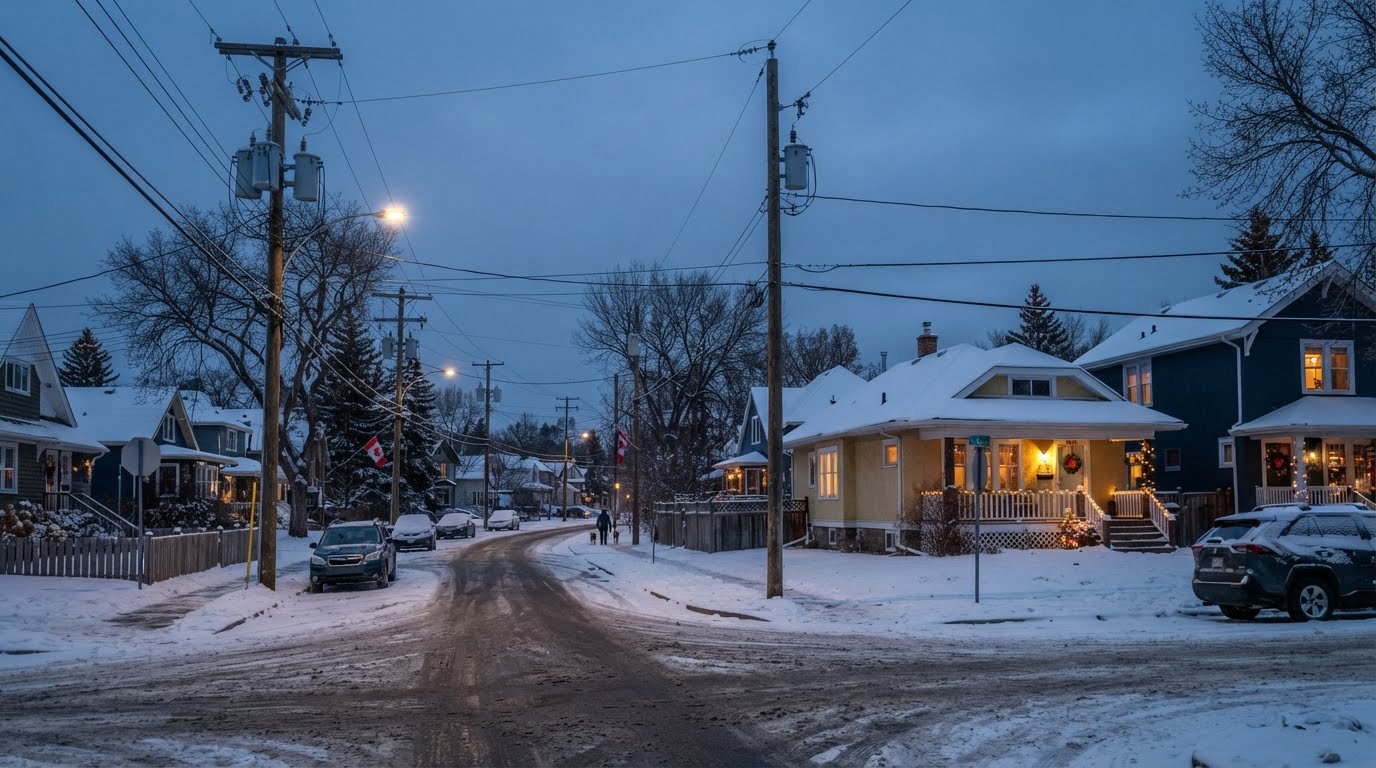
Alberta’s winter utility protections begin on October 15, 2026, just as households prepare for colder weather and higher heating costs.
Under Alberta’s Winter Rules, residential electricity services generally cannot be fully disconnected between October 15 and April 15. Natural gas protection begins later, on November 1, and continues through April 14.
These protections matter for households struggling with overdue utility bills. However, the rules do not cancel unpaid balances, prevent all restrictions on electricity use or automatically reconnect a home whose service was already disconnected.
Here is what Alberta residents should know before the winter protection period begins.
When do Alberta’s Winter Utility Rules take effect?
On October 14, the Alberta government announced that its seasonal utility protections would take effect the following day.
The official provincial announcement identifies different dates for residential electricity and natural gas.
| Utility | Protection begins | Protection ends |
|---|---|---|
| Residential electricity | October 15, 2026 | April 15, 2027 |
| Residential natural gas | November 1, 2026 | April 14, 2027 |
| Commercial utility meters | Not covered by these residential Winter Rules | |
| Water services | Not covered by these particular Winter Rules | |
The distinction between electricity and natural gas is important. Residents should not assume that both protections begin on October 15.
Can an Alberta electricity provider disconnect service after October 15?
The Winter Rules generally prohibit a full disconnection of residential electricity service during the protected period.
This means a residential customer with an overdue bill receives additional protection against losing electricity during Alberta’s coldest months.
However, the rules do not guarantee unrestricted electricity service.
A retailer may request the installation of an electricity load limiter when an account remains unpaid.
What is an electricity load limiter?
A load limiter is a device installed on an electricity meter that restricts how much electricity a household can use at one time.
It is designed to permit limited electricity consumption without fully disconnecting service.
According to Alberta’s Utilities Consumer Advocate, a load limiter may allow a home to operate a conventional furnace, refrigerator, one stove element and some lights, depending on the equipment and electrical setup.
But the available power is limited, and not all household appliances can operate normally.
What happens if a household uses too much electricity?
If electricity consumption exceeds the limit, the device can trip and temporarily interrupt power.
The Utilities Consumer Advocate says restoration procedures vary by distributor and limiter type.
Some devices allow a customer to reset power, while others restore it after a waiting period.
High-demand electrical equipment, including some electric furnaces, dryers and electric cooking appliances, may exceed the permitted load.
This is particularly important for households using electricity as their primary heating source.
Residents who depend on electrically powered medical equipment should contact their provider and the Utilities Consumer Advocate promptly about their circumstances and available protections. A load limiter does not guarantee uninterrupted power.
Does the winter protection erase unpaid utility bills?
No.
The Winter Rules restrict disconnection practices during colder months. They do not eliminate the amount a customer owes.
A household may continue accumulating charges while receiving protected service.
When the winter protection period ends, an account with an unpaid balance may again become subject to full disconnection under the applicable rules.
For this reason, avoiding disconnection should not be confused with receiving financial assistance or debt forgiveness.
A practical example: a household falls behind by $600
Consider a fictional Alberta household with an overdue electricity balance of $600 in October.
| Situation | What it means |
|---|---|
| October 15 arrives | Winter electricity disconnection protection begins for residential service. |
| The $600 remains unpaid | The debt is not automatically forgiven. |
| The retailer requests a limiter | Electricity use may be restricted rather than fully disconnected. |
| The household negotiates repayment | A payment arrangement may help resolve the overdue balance. |
| Winter protection expires | Unresolved arrears may create renewed disconnection risk. |
This is an explanatory scenario rather than a description of what every utility company must do in an individual case.
If the $600 balance were repaid over six equal monthly instalments, the arithmetic would be $100 per month toward the overdue balance, in addition to new monthly utility charges. The actual payment arrangement would need to be agreed upon with the retailer.
Natural gas has a different start date
Residential natural gas protection begins on November 1.
According to the Utilities Consumer Advocate’s Winter Rules guidance, natural gas service generally cannot be disconnected between November 1 and April 14 under the winter protection rules.
This difference can be significant in October because many Alberta households begin heating their homes before November arrives.
There is also a broader weather-related protection. Alberta says utility disconnections are prohibited when temperatures are forecast to fall below zero within 24 hours of a planned disconnection, regardless of the season.
What if your electricity or natural gas is already disconnected?
Winter protection does not automatically restore service that was previously disconnected.
A household without service should contact its utility retailer and the Utilities Consumer Advocate rather than assuming electricity or gas will return when October 15 or November 1 arrives.
Alberta has a separate Winter Utilities Reconnection Program.
Through this program, the Utilities Consumer Advocate works with retailers, distributors and social support agencies to help qualifying households restore service before or during winter.
The UCA says it begins contacting certain customers with disconnected services starting November 1.
Residents do not have to wait to be contacted before asking for assistance.
Who can help with overdue utility bills?
Alberta’s Utilities Consumer Advocate can explain consumer protections, help address disputes and assist with communication between customers and utility providers.
It may also help arrange payment discussions or refer eligible consumers to social agencies.
However, the UCA itself does not directly pay a customer’s overdue utility bill.
Utilities Consumer Advocate contact information:
- Within Alberta: 310-4822
- Outside Alberta: 1-888-644-6608
- Website: ucahelps.alberta.ca
What should a renter do if utilities are included in the rent?
Some Alberta renters pay electricity and natural gas directly to a utility retailer. Others live in properties where utility charges are included in the rent or managed by a landlord.
If the account belongs to the landlord or property manager, the tenant may not be able to negotiate directly with the utility retailer as the account holder.
A renter who receives a warning about interrupted utilities should contact the landlord or property manager promptly and document the communication.
The UCA can help explain utility-service rules, while landlord-tenant responsibilities may also depend on the lease and Alberta’s residential tenancy legislation.
Does this apply to businesses?
No. These particular Winter Rules apply to residential utility services, not commercial meters.
A business with overdue utility charges should contact its retailer directly to discuss payment arrangements and applicable commercial account rules.
The same distinction applies to water services, which are outside these specific winter electricity and natural gas protections.
How is this different from Alberta’s $100 Energy Rebate?
The Winter Rules are a consumer-protection measure. They do not provide a direct cash payment.
Alberta’s separate $100 Energy Rebate is a one-time financial benefit with its own eligibility requirements and application deadline.
Maple Curiosity’s Alberta $100 Energy Rebate guide explains that program, including the October 31, 2026 deadline.
A household may need help managing utility bills even if it qualifies for a rebate.
Why electricity bills can still be difficult to predict
Alberta utility bills can contain more than the underlying electricity or natural gas commodity price.
Delivery charges, distribution charges, administration fees and other regulated components can affect the final total.
As a result, lower electricity market prices do not necessarily create an equally large reduction in the amount a household pays.
For a broader view of household expenses, Maple Curiosity’s Alberta Cost of Living guide compares housing, utilities, groceries and transportation costs.
What should you do if you receive a disconnection notice?
Residents facing a pending disconnection should act before the scheduled date rather than relying only on seasonal protections.
- Check whether the notice concerns electricity, natural gas or another service.
- Confirm the amount owing and the scheduled disconnection date.
- Contact the retailer to discuss payment options and report any recent payments.
- Ask whether a load limiter has been installed or is being considered.
- Contact the Utilities Consumer Advocate if the situation is unclear or a dispute remains unresolved.
- Keep records of notices, payments and communications.
If a load limiter has already been installed, ask the retailer how it can be removed. Do not attempt to tamper with the meter or limiter.
Frequently Asked Questions
Can electricity be completely disconnected in January for an overdue bill?
Under Alberta’s residential Winter Rules, full electricity disconnection is generally prohibited during the protected period. However, electricity consumption may still be restricted through a load limiter.
Does natural gas protection start October 15?
No. The natural gas Winter Rules begin November 1, while residential electricity protection begins October 15.
Are unpaid balances cancelled in winter?
No. The rules do not forgive unpaid balances or stop new utility charges from accumulating.
Will an already disconnected household be reconnected automatically?
No. The customer should contact the retailer or Utilities Consumer Advocate and ask about reconnection assistance.
What matters most this winter?
Alberta’s seasonal utility protections reduce the risk of residents losing essential power and heating services during winter.
But protection against disconnection is not the same as guaranteed unrestricted service or financial assistance.
For households struggling with utility costs, the most useful next step is to contact the retailer early, understand the applicable protection dates and work toward a manageable arrangement before unpaid balances become more difficult to resolve.
Leave a Reply