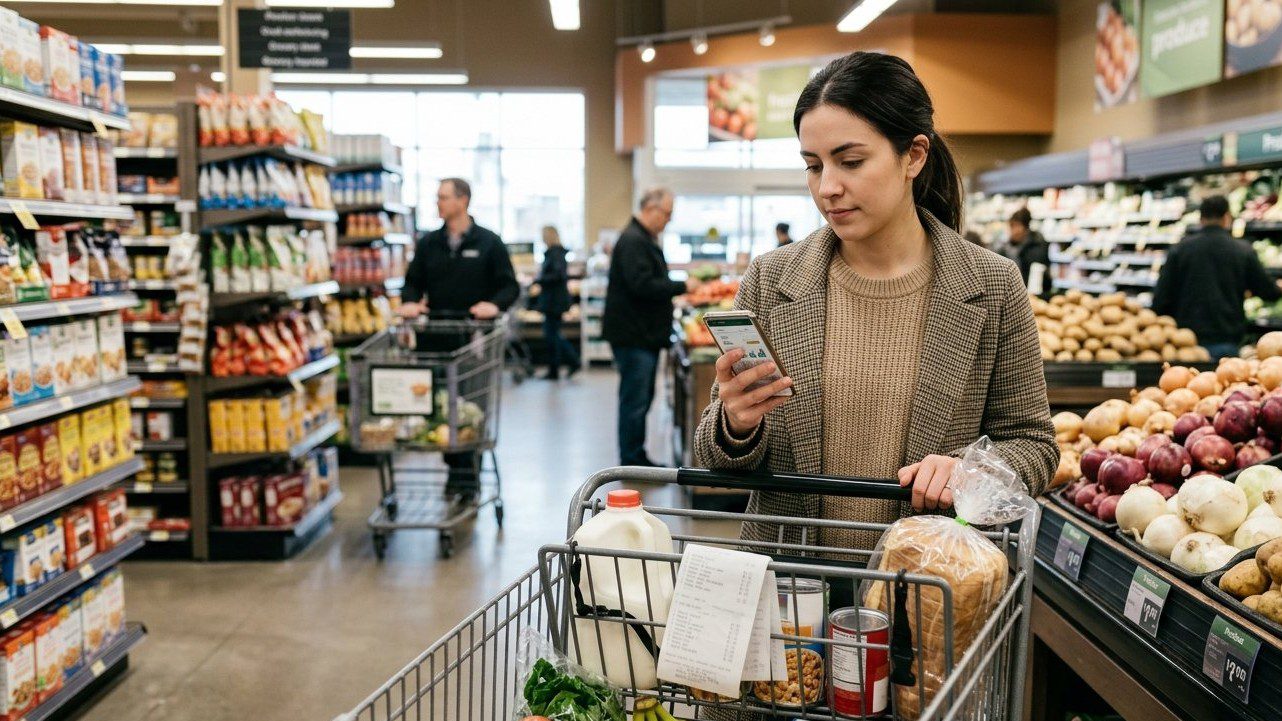
Grocery shopping remains a major household expense in Canada, even as food inflation has started to cool. According to Statistics Canada, prices for food purchased from stores were 2.8% higher in August 2026 than a year earlier and were about 29% higher than in August 2021.
That makes grocery savings less about finding one permanently “cheapest” supermarket and more about comparing weekly prices, using loyalty programs carefully, understanding price-match rules and buying larger quantities only when the math actually works.
For current national food-price data, see the Statistics Canada Food Price Data Hub.
1. There Is No Single Cheapest Grocery Store in Canada
Canadian grocery prices vary by city, province, product, store location and weekly promotion. A retailer that has the lowest price on chicken this week may be more expensive for milk, cereal or produce.
Instead of choosing a supermarket based only on reputation, compare the total cost of the products your household actually buys.
A practical approach is to divide stores into shopping roles:
- Discount supermarkets: Stores such as No Frills and FreshCo often emphasize lower prices, flyer promotions and private-label products.
- Full-service supermarkets: Stores such as Sobeys, Safeway and other regional chains may offer wider selections, prepared foods and loyalty promotions.
- Large-format retailers: Walmart and Real Canadian Superstore can be useful for combining groceries with household purchases.
- Warehouse clubs: Costco can offer large package sizes, but shoppers should compare the unit price and consider whether the household will actually use the full quantity.
The important comparison is not simply which store has the lowest advertised price. It is the cost per unit, kilogram, litre or 100 grams.
2. Use Flipp to Compare Weekly Flyers Before Shopping
Flipp collects digital flyers and deals from retailers based on your postal code. Instead of opening multiple grocery-store websites, you can search for an individual product and compare current advertised deals in your area.
For example, searching for terms such as eggs, milk, chicken breast or coffee can quickly show which nearby retailers are promoting those products that week.
Flipp also provides a digital shopping list. You can add regular grocery items, save flyer deals and search for promotions connected to products already on your list.
A useful weekly routine is:
- Write your normal grocery list before looking at promotions.
- Search the most expensive items in Flipp.
- Compare prices at two or three convenient stores.
- Choose the store or combination of stores that reduces your total basket cost.
- Avoid adding unnecessary products simply because they are on sale.
This approach helps prevent a common budgeting mistake: spending more overall while trying to “save” on individual discounted products.
3. Understand Which Stores Actually Price Match
Price matching can reduce the need to visit several supermarkets, but policies are not universal and may differ by location.
No Frills
No Frills currently operates a “Won’t Be Beat” price-match program. If an eligible major supermarket competitor within the store’s geographic trade area advertises a lower price on an eligible identical or comparable item, the store may match that advertised price.
The list of qualifying competitors is determined locally, and restrictions apply to certain promotions, loyalty pricing and quantities. Check the current No Frills price-match policy before relying on it.
FreshCo
FreshCo’s Lowest Price Guarantee goes slightly further for qualifying offers. When an eligible discount supermarket competitor in the local trade area advertises a lower price on an eligible item, FreshCo states that it will sell the item for one cent less than the competitor’s advertised price.
The eligible competitors vary by region and store, and quantity and promotion restrictions apply. See the FreshCo Lowest Price Guarantee for current details.
Walmart Canada
Do not assume Walmart Canada will match another supermarket’s flyer. Walmart Canada’s current pricing policy specifically excludes competitor-advertised prices.
For eligible identical products purchased in a Walmart Canada store, Walmart may instead match a lower price shown on Walmart.ca, subject to its conditions and availability rules.
Because retailer policies can change, always check the store’s current rules before planning a shopping trip around price matching.
4. Combine Flyers With Loyalty Programs
Flyer savings and loyalty programs can work together, but points should be treated as a secondary benefit rather than a reason to buy something you do not need.
PC Optimum
PC Optimum is available at participating Loblaw-affiliated retailers, including No Frills and Real Canadian Superstore. Personalized offers and product promotions can provide points on purchases you were already planning to make.
If you use PC Optimum regularly, check your available offers before shopping rather than assuming every grocery purchase automatically earns the same number of points.
Scene+
Scene+ can be earned and redeemed at participating grocery banners including Sobeys, Safeway and FreshCo. Members may also receive personalized or product-specific grocery offers.
See the Scene+ grocery program information for participating banners and current rules.
The strongest combination is usually:
- buy an item you already need,
- when its regular or flyer price is competitive,
- and collect an available points offer at the same time.
5. Compare Unit Prices Before Buying in Bulk
Costco and other bulk retailers can be useful for households that consistently consume larger quantities, but a larger package does not automatically mean a lower grocery bill.
Compare the unit price shown on the shelf or calculate it yourself:
Total price ÷ quantity = unit cost
For example, compare the price per 100 grams, kilogram, litre or individual unit rather than comparing package prices alone.
Bulk purchasing tends to make more sense for products that your household uses regularly and that have a long shelf life, such as rice, pasta, frozen foods, paper products or frequently used household staples.
Be more cautious with fresh produce, bakery products and other perishables. A low unit price provides no real saving if part of the product is eventually thrown away.
Costco also requires a paid membership for most warehouse shopping, so occasional shoppers should include the membership cost when deciding whether bulk shopping provides enough value for their household.
6. Private-Label Products Can Lower the Basket Cost
Another way to reduce grocery spending is to compare store brands with national brands rather than automatically purchasing the same brand each week.
Products such as canned goods, flour, frozen vegetables, pasta, cleaning supplies and basic pantry items often have both private-label and national-brand versions.
Compare:
- unit price,
- package size,
- ingredients,
- nutritional information, and
- whether a branded product has a temporary promotion that changes the comparison.
The cheapest option can change from week to week, so brand loyalty can sometimes cost more than product loyalty.
7. Build Meals Around What Is Already at Home
One of the simplest grocery-saving strategies does not involve a store at all: check your refrigerator, freezer and pantry before shopping.
Meal planning around ingredients you already own helps reduce duplicate purchases and food waste. Then use weekly flyers to fill only the gaps in your meal plan.
For example, if you already have rice, frozen vegetables and sauces at home, your weekly shopping may only require a discounted protein and a few fresh ingredients rather than an entirely new set of meals.
8. Be Careful With “Spend More, Get More” Promotions
Offers such as “spend $100 and receive points” can provide value when your normal grocery list is already close to the required amount.
They become less useful when you add $20 or $30 of unnecessary products just to reach the threshold.
Before increasing your basket, compare the value of the reward with the extra amount you would have to spend.
9. A Simple Grocery-Saving Routine for 2026
You do not need to visit four supermarkets every week to lower your grocery bill. A simple system is usually easier to maintain:
- Create your grocery list based on meals and items already at home.
- Use Flipp to search the highest-cost items on your list.
- Compare unit prices rather than package prices.
- Choose one main store and use legitimate price matching where available.
- Load relevant PC Optimum or Scene+ offers before shopping.
- Buy bulk items only when your household will use them.
- Review your receipt and grocery spending at the end of the month.
Over time, this gives you a more accurate picture of which stores and strategies actually save money for your household.
Grocery Costs in Alberta
If you live in Alberta, grocery costs and shopping patterns can differ from other provinces. See our Alberta Grocery Prices 2026 guide for a province-specific look at food costs and budgeting strategies.
Households looking for information about federal grocery-related financial support can also read our Canada Groceries & Essentials Benefit 2026 guide.
Final Takeaway
Saving money on groceries in Canada is less about identifying one permanently cheapest retailer and more about building a repeatable shopping system. Compare weekly flyers, check unit prices, use price matching only where the retailer actually offers it, combine purchases with useful loyalty offers and avoid buying more than your household can use.
With grocery prices still well above their 2021 levels, even small improvements in weekly shopping habits can make household food spending easier to manage over the course of a year.
Leave a Reply