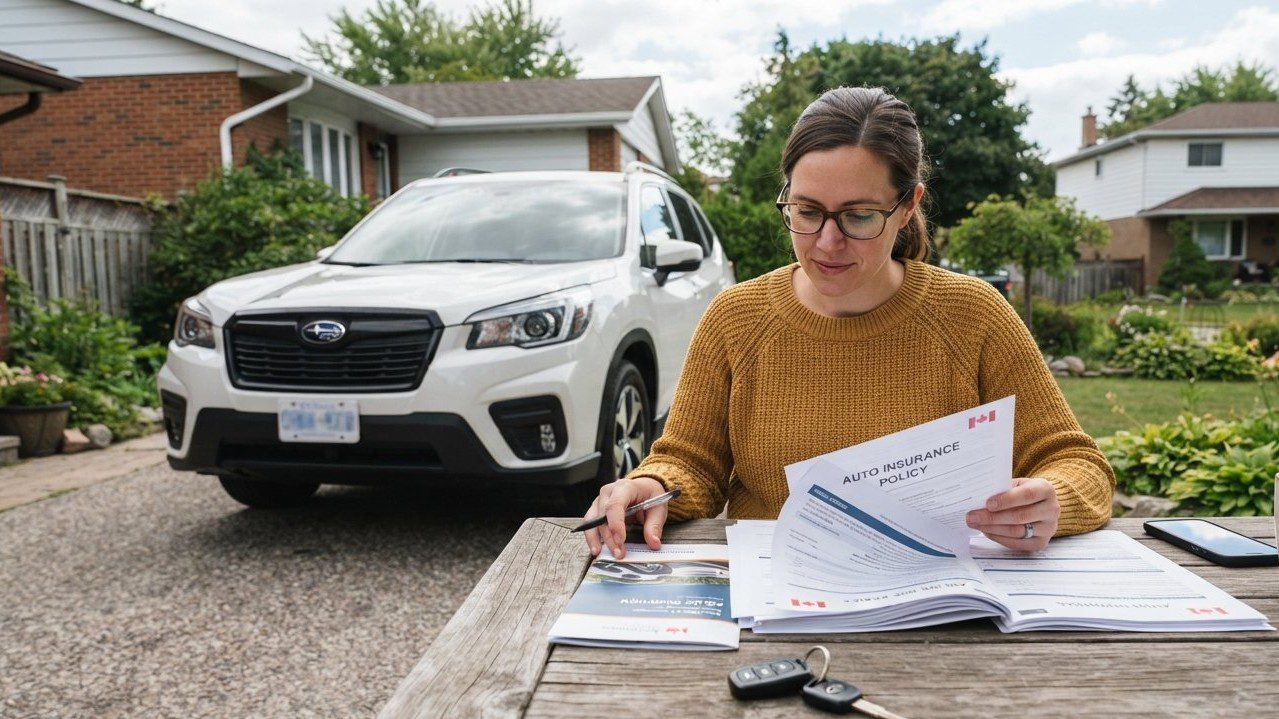
Car insurance is mandatory across Canada, but the rules are not the same from one province to another.
Some provinces use public basic insurance, some rely on private insurers, and Quebec uses a hybrid system. Minimum liability limits, accident benefits, physical-damage coverage and pricing rules can all change when you move.
That is why a useful 2026 comparison starts with the province, not with a single national “average premium.”
Canada Does Not Have One Auto-Insurance System
| Province or System | Basic Structure |
|---|---|
| British Columbia | Mandatory Basic Autoplan through ICBC; optional coverage can be added |
| Saskatchewan | Basic plate insurance through SGI; extension coverage is available |
| Manitoba | Basic Autopac through Manitoba Public Insurance |
| Quebec | Public bodily-injury plan plus mandatory private civil-liability insurance |
| Alberta | Private insurers |
| Ontario | Private insurers |
The underlying coverage can differ just as much as the insurer.
For example, Manitoba’s Basic Autopac includes all-perils protection for a vehicle, covering collision as well as risks such as theft, hail and fire. In Alberta, collision and comprehensive are additional coverages rather than mandatory basic insurance.
What Coverage Is Mandatory?
Third-party liability is a core part of Canadian auto insurance, but the legal minimum differs by province.
| Province | Basic Third-Party Liability |
|---|---|
| Alberta | $200,000 minimum |
| Ontario | $200,000 minimum |
| British Columbia | $200,000 included in Basic insurance |
| Saskatchewan | $200,000 included in basic plate insurance |
| Manitoba | $500,000 included in Basic Autopac |
| Quebec | $50,000 minimum private civil-liability coverage for an ordinary vehicle |
Provincial minimums are legal starting points, not universal coverage recommendations. Higher liability limits are widely available.
Third-Party Liability
Third-party liability protects against covered claims when you are legally responsible for injuries or property damage suffered by someone else.
In Alberta, the Automobile Insurance Rate Board states that the legal minimum is $200,000 and that most Alberta drivers carry at least $1 million.
Alberta coverage details are available from the Automobile Insurance Rate Board.
Accident Benefits
Accident benefits help cover certain costs after an injury, but the structure varies significantly across Canada.
In Alberta, basic auto insurance includes accident benefits and third-party liability. Alberta describes accident benefits as no-fault benefits because the insurer pays eligible benefits regardless of who caused the collision.
Ontario changed its accident-benefit structure on July 1, 2026. For policies entered into on or after that date, medical, rehabilitation and attendant-care benefits remain mandatory. Other accident benefits, including income replacement, non-earner, caregiver and several related benefits, are optional.
Ontario’s current rules are explained by the Financial Services Regulatory Authority of Ontario.
Collision and Comprehensive Coverage
Collision generally covers damage to your own vehicle caused by a covered collision, subject to the policy terms and deductible.
Comprehensive generally covers certain non-collision losses such as theft, vandalism, hail and fire.
In Alberta, neither collision nor comprehensive is required by law. A lender or leasing company can still require physical-damage coverage as part of a financing or lease agreement.
In British Columbia, ICBC Basic insurance includes basic vehicle-damage protection in certain not-at-fault situations, while optional Collision covers repairs to your own vehicle when you are responsible for the crash.
ICBC explains the current structure at Basic insurance and Enhanced Care.
Manitoba Basic Autopac Already Includes Physical-Damage Coverage
Manitoba is one reason Canada-wide statements about “optional collision” can be misleading.
Manitoba Public Insurance states that Basic Autopac includes all-perils coverage for accidental vehicle damage, including collision, upset, theft, vandalism, hail and fire, subject to the deductible and policy terms.
See MPI Basic all-perils coverage.
Quebec Uses a Hybrid Insurance System
Quebec’s public automobile insurance plan administered by the SAAQ covers bodily injury under the provincial system.
Vehicle owners must also carry private civil-liability insurance. For an ordinary vehicle, SAAQ states that the minimum private liability amount is $50,000.
SAAQ’s current overview is available at Quebec’s public automobile insurance plan.
Why Car Insurance Premiums Vary So Much
There is no single useful premium that represents every Canadian driver.
Pricing can depend on factors such as:
- province and rating territory
- years of driving experience
- claims history
- traffic convictions
- vehicle make, model and use
- annual kilometres and commute
- drivers listed on the policy
- coverage limits
- deductibles
- insurer
Two drivers in the same city can therefore receive very different quotes, even for similar vehicles.
Alberta’s 2026 Good Driver Rate Cap
Alberta has a specific rate-cap rule for qualifying good drivers in 2026.
The province caps qualifying premium increases at 7.5%, made up of a 5% good-driver rate cap plus a 2.5% rider related to natural-disaster costs.
For 2026, Alberta defines a good driver as someone without:
- an at-fault accident in the last 6 years
- a Criminal Code traffic conviction in the last 4 years
- a major traffic conviction in the last 3 years
- a minor traffic conviction in the last 3 years
Eligibility is determined at the policy renewal date.
Current details are published by the Government of Alberta and AIRB.
Alberta Care-First Does Not Start Until 2027
Alberta’s current 2026 auto-insurance system remains in place through the end of the year.
The province states that its new Care-First auto-insurance system starts on January 1, 2027.
The new model changes injury benefits and the role of litigation, so 2027 rules should not be described as though they already apply in 2026.
Official information is available at Care-First auto insurance.
Ontario’s July 2026 Accident-Benefit Change
Ontario’s July 1, 2026 reform changes what is automatically included in a policy.
Medical, rehabilitation and attendant-care benefits remain mandatory. Other accident benefits become optional and can be added or removed depending on the policy and customer choices.
Because of that change, drivers comparing Ontario policies should check the accident-benefit selections rather than comparing the premium alone.
FSRA’s current explanation is available at Optional and extra coverage.
Ways to Lower an Auto-Insurance Premium
The amount saved by any one change depends on the insurer and province, but regulators identify several factors that can reduce premiums for some drivers.
Compare Similar Quotes
In provinces with private competition, different insurers can charge different amounts for the same driver profile.
Alberta specifically encourages drivers to shop around and notes that more than 25 private insurers offer private-passenger vehicle coverage in the province.
When comparing quotes, keep the liability limit, deductibles, drivers and optional coverages as similar as possible.
Review the Deductible
A higher deductible can reduce the premium because the policyholder assumes more of the cost of a claim.
The trade-off is a larger amount to pay out of pocket when a covered claim occurs.
Ask About Multi-Policy Discounts
Some insurers offer discounts when auto insurance is combined with home, condo or tenant insurance.
The discount is insurer-specific, so there is no reliable Canada-wide percentage.
Check Usage-Based Insurance
Some insurers offer usage-based insurance, sometimes called pay-how-you-drive or pay-as-you-drive.
Alberta says these programs may provide discounts or rewards based on driving habits. Before enrolling, review what driving data is collected and how the program uses it.
Review Optional Physical-Damage Coverage on an Older Vehicle
For an older vehicle with a lower market value, the cost of collision or comprehensive coverage can become a larger share of the amount the insurer might pay after a total loss.
Any decision should also account for the deductible, the vehicle’s value and whether a lender or lessor requires the coverage.
Winter-Tire Discounts Are Not the Same Across Canada
Ontario has a clear provincial rule: FSRA states that all Ontario auto insurers must offer a winter-tire discount to customers who meet the insurer’s requirements.
The amount is not fixed by one national standard, and availability outside Ontario depends on the province and insurer.
Ontario’s current discount information is included in FSRA’s auto-insurance savings guidance.
Credit Scores Do Not Work the Same Way in Auto Insurance Everywhere
A high credit score should not be treated as a Canada-wide auto-insurance discount.
Ontario prohibits insurers from using credit information, credit history or credit rating in auto-insurance rating and underwriting.
Other provinces can have different rules, so credit should not be presented as a universal pricing factor.
For general Canadian credit-report information, see our Credit Score Canada 2026 guide.
Traffic Tickets and At-Fault Accidents Do Not Have One National Surcharge
A conviction or at-fault accident can affect insurance, but there is no rule that every minor ticket or every collision increases a premium by the same percentage for the same number of years.
The outcome depends on the province, insurer, type of conviction, claims history and rating rules.
Alberta’s 2026 good-driver protection uses specific lookback periods, including three years for minor and major convictions and six years for at-fault accidents. Those thresholds apply to Alberta’s rate-cap eligibility rather than creating a Canada-wide pricing rule.
Newcomers and Foreign Driving Experience
Previous foreign driving or insurance records can be useful, but there is no national rule guaranteeing a specific discount.
Insurers and public insurance systems can have different requirements for licence history, claims records and proof of previous insurance.
Useful records can include a driver’s abstract, licence-history document, claims-history letter and insurance-history letter.
For provincial licence-exchange rules, see our Foreign Driver’s Licence Exchange in Canada 2026 guide.
Compare Coverage Before Comparing Price
A lower quote can reflect less coverage rather than a better price for the same insurance.
Before comparing two quotes, check:
- third-party liability limit
- collision and comprehensive coverage
- deductibles
- accident-benefit selections
- listed drivers
- vehicle use
- endorsements and add-ons
Once the coverage is reasonably similar, the premium comparison becomes much more useful.
Car Insurance in Canada 2026: Key Points
| Topic | 2026 Rule or Principle |
|---|---|
| National insurance system | None; rules are provincial or territorial |
| Alberta basic insurance | Accident benefits, third-party liability and DCPD |
| Alberta minimum liability | $200,000 |
| Alberta 2026 good-driver cap | 7.5% for qualifying drivers |
| Alberta Care-First | Starts January 1, 2027 |
| Ontario reform | From July 1, 2026, only medical, rehabilitation and attendant-care accident benefits remain mandatory |
| Ontario credit information | Not permitted for auto-insurance rating and underwriting |
| Ontario winter tires | Insurers must offer a qualifying discount |
Frequently Asked Questions
Is car insurance mandatory in Canada?
Yes, but the required coverage is set by each province or territory rather than by one national policy.
Which provinces have public basic auto insurance?
British Columbia, Saskatchewan and Manitoba use public basic insurance systems. Quebec uses a hybrid model with public bodily-injury coverage and private property-liability insurance.
Is collision insurance mandatory?
Not everywhere. In Alberta it is optional by law, although a lender or leasing company may require it. Manitoba’s Basic Autopac already includes all-perils physical-damage coverage.
What is Alberta’s minimum liability coverage?
The legal minimum is $200,000 in third-party liability coverage.
What is Alberta’s 2026 good-driver rate cap?
Qualifying drivers have premium increases capped at 7.5% in 2026 under the province’s good-driver protection rules.
When does Alberta Care-First begin?
The new system starts January 1, 2027.
What changed in Ontario on July 1, 2026?
Medical, rehabilitation and attendant-care benefits remain mandatory, while other accident benefits became optional for policies under the new rules.
Do winter tires reduce insurance?
In Ontario, insurers must offer a winter-tire discount to qualifying customers. The amount varies by insurer. Elsewhere, availability depends on the insurer and province.
Does a high credit score lower auto insurance?
Not as a Canada-wide rule. Ontario prohibits the use of credit information in auto-insurance rating and underwriting.
Disclaimer: Auto-insurance laws, benefits, limits and pricing vary by province, insurer and policy. Confirm current coverage requirements and policy terms with the relevant provincial regulator, insurer, agent or broker before purchasing or changing coverage.
Leave a Reply